 VIPSolutions
Act like a helpful tutor and exlain me :lg ——— UTi rent ation has the ooing al me {i a ] i RT ee ne Ee following bifurcation diagrab] — Co ea b SRR I i | rn Hs | HL { 4 5 ire He J 1 hd | Py a Ee ia ge = LL rl E i P WE 7 LEH = a ] ; = — gE : A SEE = rE — a ——= Fr Ea = Lh ses a. Fg — | —= LL : a Li i; Lo = 1 Pia ; ——— = | i — = ym : FE (ll LE suomi Question a | — 1 | ma a = iE = HE : EE = i ; a Sea : = a = co Ee i J ha a Te = PE ? a Ee ee
Question:
Act like a helpful tutor and exlain me :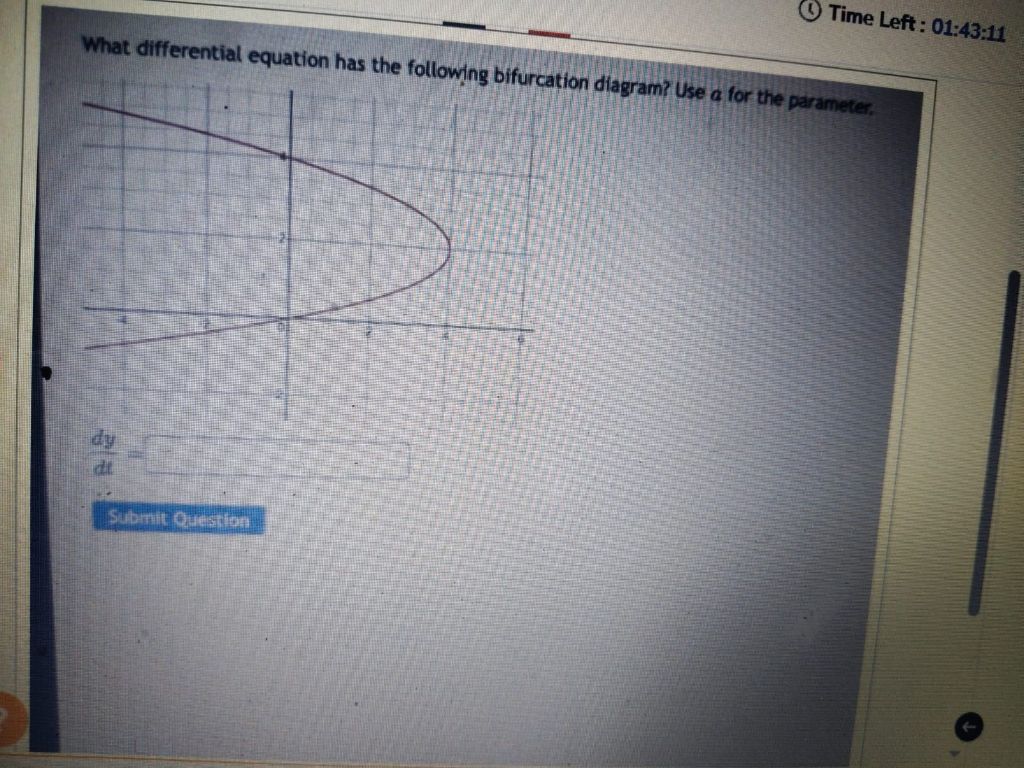 lg ——— UTi
rent ation has the ooing al me
{i a ] i RT ee ne
Ee following bifurcation diagrab] —
Co ea b SRR
I i | rn Hs |
HL { 4 5 ire He J 1
hd | Py a Ee
ia ge =
LL rl E
i P WE 7 LEH =
a ] ; = —
gE : A SEE =
rE — a ——=
Fr Ea =
Lh ses a.
Fg — | —=
LL : a
Li i; Lo =
1 Pia ; ——— =
| i — =
ym : FE
(ll LE suomi Question a | —
1 | ma a =
iE = HE
: EE =
i ; a
Sea : = a
= co
Ee i J ha
a Te = PE ? a
Ee ee
lg ——— UTi
rent ation has the ooing al me
{i a ] i RT ee ne
Ee following bifurcation diagrab] —
Co ea b SRR
I i | rn Hs |
HL { 4 5 ire He J 1
hd | Py a Ee
ia ge =
LL rl E
i P WE 7 LEH =
a ] ; = —
gE : A SEE =
rE — a ——=
Fr Ea =
Lh ses a.
Fg — | —=
LL : a
Li i; Lo =
1 Pia ; ——— =
| i — =
ym : FE
(ll LE suomi Question a | —
1 | ma a =
iE = HE
: EE =
i ; a
Sea : = a
= co
Ee i J ha
a Te = PE ? a
Ee ee
This is AI generated Response.
Asked by: SANJAY
Created at: 2025-10-15 06:07:18
Asked by: SANJAY
Created at: 2025-10-15 06:07:18
Final Answer:
Rendered
Raw Text
Did you like this answer?
Sure! Let's break down the question and the diagram.
---
## **Understanding the Bifurcation Diagram**
The diagram shown in your image is a classic **bifurcation diagram**. Bifurcation diagrams show how the equilibrium points (steady states) of a system change as a parameter (here, \( a \)) is varied.
### **Shape of the Diagram**
- The diagram looks like a sideways "Y" or a "pitchfork"—but with a single branch splitting into two branches as you move along the horizontal axis (the parameter \( a \)).
- This is known as a **saddle-node** or **fold bifurcation**.
---
## **Form of the Differential Equation**
The most common differential equation that produces this type of bifurcation is:
\[
\frac{dy}{dt} = a - y^2
\]
- Here, \( a \) is the bifurcation parameter.
- The equilibrium points are found by setting \(\frac{dy}{dt} = \):
\[
a - y^2 = \implies y^2 = a \implies y = \pm \sqrt{a}
\]
- For \( a < \), there are **no real equilibria**.
- For \( a = \), there is **one equilibrium** at \( y = \).
- For \( a > \), there are **two equilibria** at \( y = +\sqrt{a} \) and \( y = -\sqrt{a} \).
This matches the structure of the diagram you see.
---
## **Summary Table**
| Parameter \(a\) | Equilibrium points \(y\) | Number of Equilibria |
|:---------------:|:-----------------------------:|:--------------------:|
| \( a < \) | none (no real solutions) | |
| \( a = \) | \( y = \) | 1 |
| \( a > \) | \( y = \pm \sqrt{a} \) | 2 |
---
## **Final Answer**
\[
\boxed{
\frac{dy}{dt} = a - y^2
}
\]
- This equation produces the bifurcation diagram shown.
- The parameter \( a \) controls how many equilibrium points there are.
---
### **Extra: Why does this happen?**
This type of bifurcation is called a **saddle-node bifurcation**. As \( a \) increases through , a pair of equilibria (one stable and one unstable) are created or destroyed.
---
If you have more questions about bifurcations or want to see how to analyze the stability, just ask!
📢 Instructions:
- Ask anything relatd to above question only.
- For new Question goto :