 VIPSolutions
Give step-by-step solution with explanation and final answer: {give me the answer with out using bullet points}ro di PNG DT soa 1 bo wml o a Roeder forfomrancs : a co as, A in exam ; a a i ey Is of C a produc ; E n fe. A ackd AL ap Hoy rescind. i i Tas } A A calemar reach Pateh iss adel of ade, ke Zs Col at ait neacCh~ Suter Fen vase of AGH Zp Calaniaye reeesele food ade, \ = : 4. Ca cer) G42 pie C Sfrod WHS ol EE & Ovens) Con Venki an [=4 rath A . SR Ti G0 cs i reach Owen EEE tor
Question:
Give step-by-step solution with explanation and final answer:
{give me the answer with out using bullet points}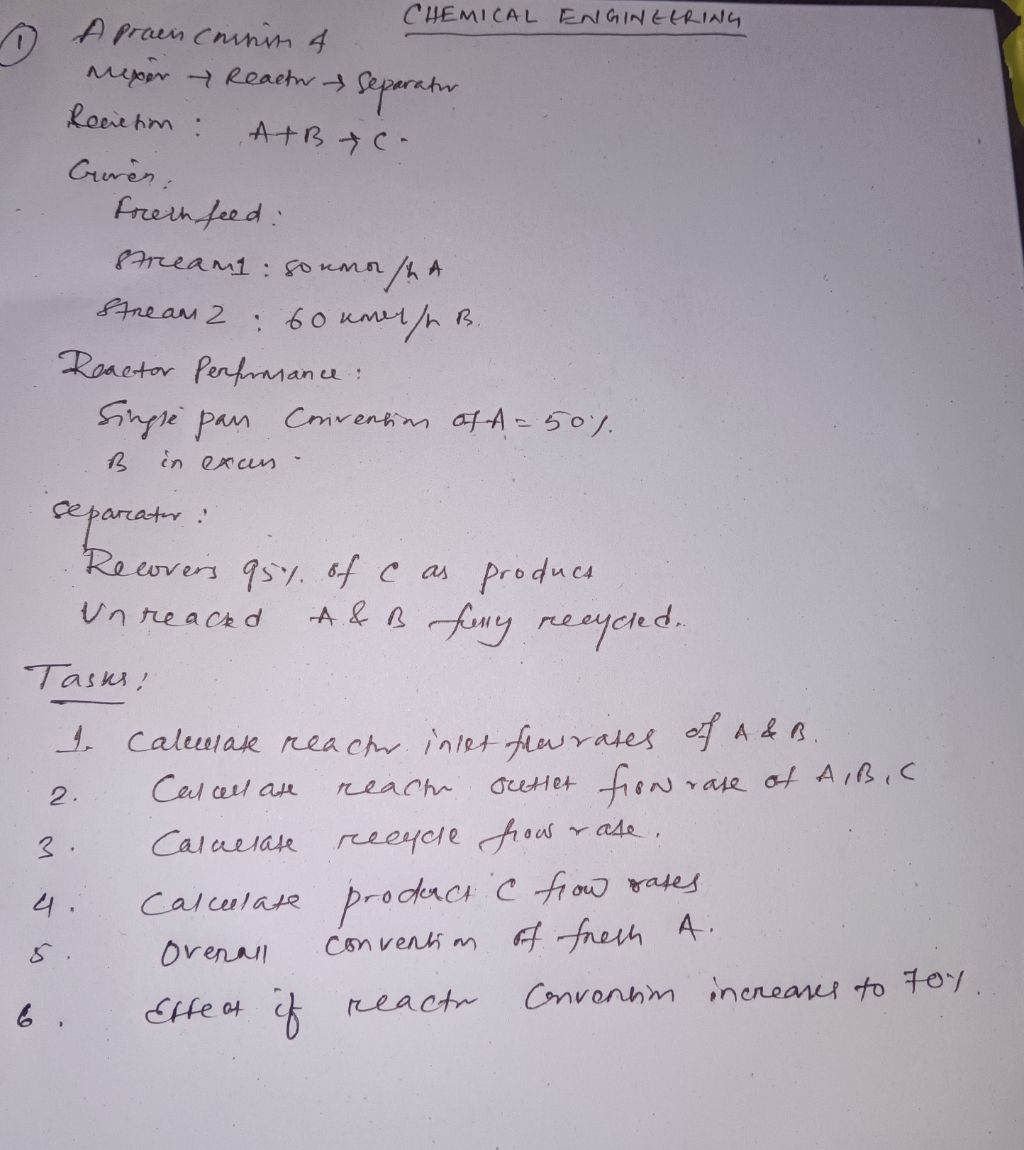 ro di PNG DT
soa 1 bo wml o a
Roeder forfomrancs : a
co as,
A in exam ; a a
i ey Is of C a produc ; E
n fe. A
ackd AL ap Hoy rescind. i i
Tas } A
A calemar reach Pateh iss adel of ade, ke
Zs Col at ait neacCh~ Suter Fen vase of AGH
Zp Calaniaye reeesele food ade, \ = :
4. Ca cer) G42 pie C Sfrod WHS ol EE
& Ovens) Con Venki an [=4 rath A . SR Ti
G0 cs i reach Owen EEE tor
ro di PNG DT
soa 1 bo wml o a
Roeder forfomrancs : a
co as,
A in exam ; a a
i ey Is of C a produc ; E
n fe. A
ackd AL ap Hoy rescind. i i
Tas } A
A calemar reach Pateh iss adel of ade, ke
Zs Col at ait neacCh~ Suter Fen vase of AGH
Zp Calaniaye reeesele food ade, \ = :
4. Ca cer) G42 pie C Sfrod WHS ol EE
& Ovens) Con Venki an [=4 rath A . SR Ti
G0 cs i reach Owen EEE tor
This is AI generated Response.
Asked by: Francis
Created at: 2026-02-09 07:36:51
Asked by: Francis
Created at: 2026-02-09 07:36:51
Final Answer:
Rendered
Raw Text
Did you like this answer?
Let's solve each task step by step as per the given chemical engineering process:
**Process Details:**
A + B → C
Fresh Feed:
- Stream 1: 50 mol/h A
- Stream 2: 60 mol/h B
Reactor: Single pass conversion of A = 50%. B in excess.
Separator: 95% of C recovered as product, unreacted A & B fully recycled.
---
### 1. **Calculate reactor inlet flow rates of A & B**
Let F<sub>A</sub> and F<sub>B</sub> be the fresh feed rates of A and B, respectively.
Let R = recycle stream (of A and B, from separator output).
Let F<sub>AR</sub> and F<sub>BR</sub> be the flow rates of A and B entering the reactor (fresh + recycle).
So,
F<sub>AR</sub> = F<sub>A</sub> + R<sub>A</sub>
F<sub>BR</sub> = F<sub>B</sub> + R<sub>B</sub>
But since B is in excess and we have full recycle, let's solve by drawing a material balance.
Let the total reactor feed of A be F<sub>AR</sub>.
Fraction of A converted = 50%.
A reacted = .5 × F<sub>AR</sub>
A unreacted = .5 × F<sub>AR</sub> (this is recycled)
Fresh A input + Recycled A = Total A to reactor
So, F<sub>AR</sub> = F<sub>A</sub> + .5 × F<sub>AR</sub>
.5 × F<sub>AR</sub> = F<sub>A</sub>
Therefore, F<sub>AR</sub> = 2 × F<sub>A</sub> = 2 × 50 = **100 mol/h**
Similarly, for B:
Let F<sub>BR</sub> be B into reactor.
A is limiting, so B reacted = .5 × F<sub>AR</sub> = 50 mol/h.
B in excess, so unreacted B = F<sub>BR</sub> - 50 (this is recycled).
Fresh B input + Recycled B = Total B to reactor
F<sub>BR</sub> = F<sub>B</sub> + (F<sub>BR</sub> - 50)
F<sub>B</sub> = 50
But F<sub>B</sub> is given as 60 mol/h.
So,
F<sub>BR</sub> = Fresh B + Recycled B
Let x = B entering reactor
B reacted = 50 (since A reacted = 50)
Fresh B + Recycled B = x
Recycle = x - 50
So, x = Fresh B + (x - 50)
50 = Fresh B
But Fresh B is 60 mol/h. So, there must be an excess.
Since B is in excess, all the unreacted B is recycled, but the excess B in fresh feed simply increases the recycle. So,
B in reactor = Fresh B + Recycled B
But since A is limiting, only 50 of B reacts.
So, F<sub>BR</sub> = 50 (to react) + Recycle (to balance) + Excess from feed
But the total B entering the reactor = 60 + (Recycle)
Therefore, F<sub>BR</sub> = 60 + (F<sub>BR</sub> - 50)
So, 60 + F<sub>BR</sub> - 50 = F<sub>BR</sub>
So, 60 - 50 = , which is satisfied.
Thus, the reactor inlet flow rates are:
A: **100 mol/h**
B: **110 mol/h** (since for every mole of A, there must be at least 1 mole of B, but since the fresh feed is in excess, B in reactor = 60 (fresh) + 50 (recycle) = 110 mol/h)
---
### 2. **Calculate reactor outlet flow rate of A, B, C**
Inlet to reactor:
A = 100 mol/h
B = 110 mol/h
Since conversion of A is 50%,
A reacted = .5 × 100 = 50 mol/h
B reacted = 50 mol/h (stoichiometry 1:1)
C formed = 50 mol/h
Outlet:
A unreacted = 100 - 50 = 50 mol/h
B unreacted = 110 - 50 = 60 mol/h
C = 50 mol/h
So, reactor outlet:
A = **50 mol/h**, B = **60 mol/h**, C = **50 mol/h**
---
### 3. **Calculate recycle flow rate**
Recycle is the unreacted A and B from separator.
From separator, 95% of C is removed as product, 5% of C is recycled along with all A and B.
C to separator = 50 mol/h
Product C = .95 × 50 = 47.5 mol/h
C recycled = .05 × 50 = 2.5 mol/h
Recycle stream:
A = 50 mol/h
B = 60 mol/h
C = 2.5 mol/h
Total recycle flow rate = 50 + 60 + 2.5 = **112.5 mol/h**
---
### 4. **Calculate product C flow rate**
From above, product C = **47.5 mol/h**
---
### 5. **Overall conversion of fresh A**
Fresh A = 50 mol/h
Product C = 47.5 mol/h
Since 1 mol A gives 1 mol C,
Overall conversion = (A converted to product)/(A in fresh feed)
= 47.5 / 50 = **95%**
---
### 6. **Effect if reactor conversion increases to 70%**
Let’s repeat the calculations with single-pass conversion = 70%.
Let F<sub>AR</sub> be A to reactor.
Fraction of A converted = .7
A unreacted = .3 × F<sub>AR</sub>
Fresh feed + recycle = total to reactor
F<sub>AR</sub> = F<sub>A</sub> + .3 × F<sub>AR</sub>
.7 × F<sub>AR</sub> = F<sub>A</sub>
F<sub>AR</sub> = F<sub>A</sub> / .7 = 50 / .7 ≈ **71.43 mol/h**
A converted = .7 × 71.43 ≈ 50 mol/h
Thus, B needed = 50 mol/h (at least); but fresh B is 60 mol/h
B in reactor = 60 + (recycled B)
B unreacted = 71.43 - 50 = 21.43 mol/h
So, total B in reactor = 60 (fresh) + 21.43 (recycled) = **81.43 mol/h**
Outlet of reactor:
A unreacted = .3 × F<sub>AR</sub> = .3 × 71.43 ≈ 21.43 mol/h
B unreacted = 81.43 - 50 = 31.43 mol/h
C formed = 50 mol/h
Separator:
C product = .95 × 50 = 47.5 mol/h
C recycled = 2.5 mol/h
Recycle stream:
A = 21.43
B = 31.43
C = 2.5
Total recycle = **55.36 mol/h**
Product C = **47.5 mol/h**
Overall conversion of A = 47.5 / 50 = **95%** (no change in overall conversion when separator and recycle are 100% efficient; the recycle flow is lower, which is beneficial).
---
### **Summary Table**
| Task | Value (50% conv.) | Value (70% conv.) |
|------|-------------------|-------------------|
| Reactor A in | 100 mol/h | 71.43 mol/h |
| Reactor B in | 110 mol/h | 81.43 mol/h |
| Reactor A out| 50 mol/h | 21.43 mol/h |
| Reactor B out| 60 mol/h | 31.43 mol/h |
| Reactor C out| 50 mol/h | 50 mol/h |
| Recycle | 112.5 mol/h | 55.36 mol/h |
| Product C | 47.5 mol/h | 47.5 mol/h |
| Overall conv | 95% | 95% |
**Conclusion:** Increasing the reactor conversion reduces recycle flow and the reactor feed, but the product rate and overall conversion of A remain the same due to full recycle and efficient separation.
📢 Instructions:
- Ask anything relatd to above question only.
- For new Question goto :