 VIPSolutions
Give step-by-step solution with explanation and final answer: Exercise 8 - Calculating and Comparing Return on Invested Capital (ROIC) Apple v. Blackberry Return on Invested Capital (ROIC) is a profitability ratio that measures how effective the firm is at generating a return for investors who have provided capital (bondholders and stockholders). The ROIC calculation answers three questions: How tax efficient is the firm? How effective are the firm’s operations? How intensively does the firm use capital? Comparing the answers to these questions between firms can help you understand why one firm is more profitable than another and where that profitability is coming from. In the following, Apple’s ROIC is compared to Blackberry’s. The income statement and balance sheet are provided for both firms. While the ROIC calculation for Blackberry is completed below, you have to complete the calculation for Apple by supplying the correct income statement and balance sheet information. As you fill in this information, the components of Apple’s ROIC will be calculated along with some supporting ratios. Use these subcomponents and supporting ratios to compare Apple and Blacberry’s performance. Where does Apple’s advantage come from? This activity demonstrates the calculation of ROIC and the comparison of firm performance, supporting Learning Objective 5-1 and 5-2. Instructions Use the income statement and balance sheet information for Apple to fill in the missing items in the calculation of Apple’s ROIC and supporting ratios. Once filled in correctly, compare Apple’s performance to that of Blackberry. Where does Apple have an advantage? Where does Blackberry have an advantage?Apple, Inc. Blackberry Income Statement YE Sept 2012 YE Mar 2012 Net sales 156,508 18,423 Cost of sales 87,846 11,848 Gross margin 68,662 6,575 Research & development expense 3,381 1,559 Selling, general & admin expense 10,040 2,600 other operating [] 930 Total operating expenses 13,421 5,089 Operating margin 55,241 1,486 Interest & dividend income [2] [2] Interest expense [3] [3 Other Income / Expense 522 21 Total Other income 522 21 Earnings before taxes 55,763 1,507 Provision for taxes 14,030 354 Net income (loss) 21,733 1,153 Apple Inc Microsoft Corporation Balance sheet YE sept 2010 YE Har 30 2012 fe) Cash & cash equivalents 10,746 207 Short-term marketable securities 15352 2,82 Accounts receivable 10,530 [A Components ° ° Finished goods ° 1,027 Inventories 7 120s Other Current Assets 15,508 Total current assets 7,55 7,671 ° Long-tern marketable securities ° 2,722 Fixed Assets: PPEE (net) 15,052 Bt Other assets 12,55 Long tern assets BEE) Total assets 75,065 [ERE a ws accounts payable 21,175 ° Accrued expenses ae ° Deferred revenue ° 2,85 other ses Total current Liabilities 3,502 3,38 ° Long-tern debt ° ° Deferred revenue - non-current ° e Deferred tax lisbilities ° Other non-current 1iabilities 1,012 2) Other long-term Liabilities Total long-term liabilities 22 Long-tern liabilities 1,012 Total lisbilities
Question:
Give step-by-step solution with explanation and final answer:
Exercise 8 - Calculating and Comparing Return on Invested Capital (ROIC) Apple v. Blackberry
Return on Invested Capital (ROIC) is a profitability ratio that measures how effective the firm is at generating a return for investors who have provided capital (bondholders and stockholders). The ROIC calculation answers three questions: How tax efficient is the firm? How effective are the firm’s operations? How intensively does the firm use capital? Comparing the answers to these questions between firms can help you understand why one firm is more profitable than another and where that profitability is coming from.
In the following, Apple’s ROIC is compared to Blackberry’s. The income statement and balance sheet are provided for both firms. While the ROIC calculation for Blackberry is completed below, you have to complete the calculation for Apple by supplying the correct income statement and balance sheet information. As you fill in this information, the components of Apple’s ROIC will be calculated along with some supporting ratios. Use these subcomponents and supporting ratios to compare Apple and Blacberry’s performance. Where does Apple’s advantage come from?
This activity demonstrates the calculation of ROIC and the comparison of firm performance, supporting Learning Objective 5-1 and 5-2.
Instructions
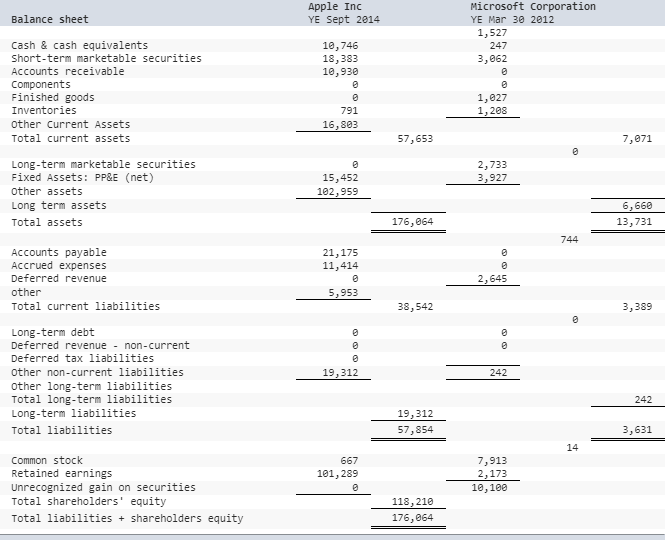
Use the income statement and balance sheet information for Apple to fill in the missing items in the calculation of Apple’s ROIC and supporting ratios. Once filled in correctly, compare Apple’s performance to that of Blackberry. Where does Apple have an advantage? Where does Blackberry have an advantage?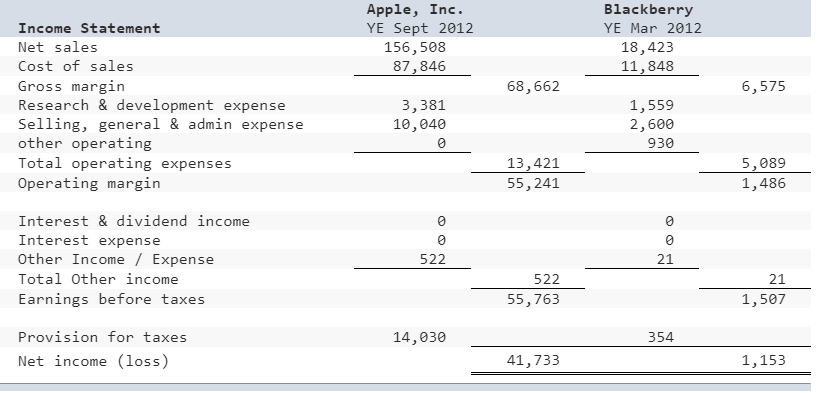
 Apple, Inc. Blackberry
Income Statement YE Sept 2012 YE Mar 2012
Net sales 156,508 18,423
Cost of sales 87,846 11,848
Gross margin 68,662 6,575
Research & development expense 3,381 1,559
Selling, general & admin expense 10,040 2,600
other operating [] 930
Total operating expenses 13,421 5,089
Operating margin 55,241 1,486
Interest & dividend income [2] [2]
Interest expense [3] [3
Other Income / Expense 522 21
Total Other income 522 21
Earnings before taxes 55,763 1,507
Provision for taxes 14,030 354
Net income (loss) 21,733 1,153
Apple Inc Microsoft Corporation
Balance sheet YE sept 2010 YE Har 30 2012
fe)
Cash & cash equivalents 10,746 207
Short-term marketable securities 15352 2,82
Accounts receivable 10,530 [A
Components ° °
Finished goods ° 1,027
Inventories 7 120s
Other Current Assets 15,508
Total current assets 7,55 7,671
°
Long-tern marketable securities ° 2,722
Fixed Assets: PPEE (net) 15,052 Bt
Other assets 12,55
Long tern assets BEE)
Total assets 75,065 [ERE
a ws
accounts payable 21,175 °
Accrued expenses ae °
Deferred revenue ° 2,85
other ses
Total current Liabilities 3,502 3,38
°
Long-tern debt ° °
Deferred revenue - non-current ° e
Deferred tax lisbilities °
Other non-current 1iabilities 1,012 2)
Other long-term Liabilities
Total long-term liabilities 22
Long-tern liabilities 1,012
Total lisbilities
Apple, Inc. Blackberry
Income Statement YE Sept 2012 YE Mar 2012
Net sales 156,508 18,423
Cost of sales 87,846 11,848
Gross margin 68,662 6,575
Research & development expense 3,381 1,559
Selling, general & admin expense 10,040 2,600
other operating [] 930
Total operating expenses 13,421 5,089
Operating margin 55,241 1,486
Interest & dividend income [2] [2]
Interest expense [3] [3
Other Income / Expense 522 21
Total Other income 522 21
Earnings before taxes 55,763 1,507
Provision for taxes 14,030 354
Net income (loss) 21,733 1,153
Apple Inc Microsoft Corporation
Balance sheet YE sept 2010 YE Har 30 2012
fe)
Cash & cash equivalents 10,746 207
Short-term marketable securities 15352 2,82
Accounts receivable 10,530 [A
Components ° °
Finished goods ° 1,027
Inventories 7 120s
Other Current Assets 15,508
Total current assets 7,55 7,671
°
Long-tern marketable securities ° 2,722
Fixed Assets: PPEE (net) 15,052 Bt
Other assets 12,55
Long tern assets BEE)
Total assets 75,065 [ERE
a ws
accounts payable 21,175 °
Accrued expenses ae °
Deferred revenue ° 2,85
other ses
Total current Liabilities 3,502 3,38
°
Long-tern debt ° °
Deferred revenue - non-current ° e
Deferred tax lisbilities °
Other non-current 1iabilities 1,012 2)
Other long-term Liabilities
Total long-term liabilities 22
Long-tern liabilities 1,012
Total lisbilities
Asked by: Rahul kumar
Created at: 2025-09-29 07:41:53
Final Answer:
📢 Instructions:
- Ask anything relatd to above question only.
- For new Question goto :